
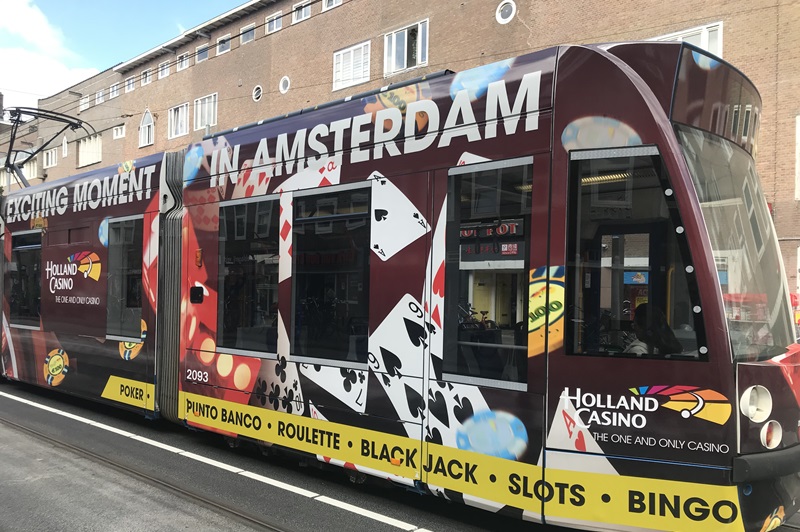

A total ban on meat advertising is coming into force in Amsterdam, while gambling advertising is strictly regulated but not banned. This is not a contradiction, but good policy. here is why.
Let’s be honest: if the Dutch had implemented a total ban on gambling advertising, we might have understood it (or almost). In fact, news broke today that the city of Amsterdam, the capital of the Netherlands, has just banned public advertising for meat and fossil fuels, with the ultimate goal of becoming carbon neutral by 2050 and having citizens halve their meat consumption in the same period. All this after being the first city in Europe and the world to ban diesel cars in an even shorter timeframe (and several years ago already).
City politicians say the decision aims to align Amsterdam’s urban landscape with the local government’s environmental goals.
That is why, if the total advertising ban had been issued in the Netherlands instead of Italy, we might have understood it. But no. Not even them : as careful as they are about social issues, civic education, and collective well-being, they never dreamed of completely banning gambling advertising, even though they used the same tool for other behaviors considered at risk. But this is certainly no accident or oversight. Quite the opposite. It is precisely the result of sensible and well-reasoned policies, since it is well known (though not in Italy, apparently) that banning the promotion of State gambling in toto only ends up favoring illegal gambling and making the legal offer, protected by the State itself, indistinguishable. In fact, the Dutch government and its regulator—the Kansspelautoriteit (Ksa)—introduced strict guidelines in 2026 against untargeted advertising, banning the use of influencers/testimonials (role models) and limiting online marketing to protect vulnerable groups. Advertising is also banned during unprotected TV hours, on the radio, and in public places, with severe restrictions on sports sponsorships as well. But as openly explained by Ksa chairman Michel Groothuizen, “such a drastic measure would risk damaging the legal market and favoring the expansion of illegal online gambling.” He noted that out of over 60,000 advertisements aimed at Dutch consumers every month, fewer than 2,000 came from regularly licensed operators. Looking at the numbers, exactly, and sticking to the facts. Not based on ideologies.
The chairman of the authority specifically stated publicly that “an absolute ban would primarily hit legal advertisements, while illegal ones would continue to proliferate, especially on social media like TikTok and Instagram. Without effective legal advertising, players could be pushed toward unregulated operators, with greater risks related to safety and consumer protection.”
Meanwhile, however, as of May 1st, as reported by the BBC website, advertisements for hamburgers, gas-powered cars, and airlines have been removed from billboards, tram shelters, and subway stations, at least in the Dutch capital.
At one of the city’s busiest tram stops, posters now promote the Rijksmuseum, the national museum of the Netherlands, and a piano concert. And why not, maybe even the city casino. Whereas until last week they were advertising chicken nuggets, SUVs, and low-cost vacations.
“The climate crisis is extremely urgent,” explains Anneke Veenhoff of the GreenLeft party. “I mean, if you want to be at the forefront of climate policy and you rent out your public spaces to those who do exactly the opposite, then what are you doing?”. And on this point, looking at it from Italy, further contradictions typical of our country come to mind, such as the one—loudly denounced in recent days—of a prediction market brand appearing on a football team’s jerseys. And that is why it was worth reflecting on this point. This isn’t Hollywood, we know that: but it’s not Amsterdam either.