
Hiring is broken in ways most companies have not yet admitted. Candidates are walking away from slow, opaque recruitment processes. Two-fifths of professional skills will be obsolete by 2030. And AI is changing the rules for both sides of the hiring table at the same time.
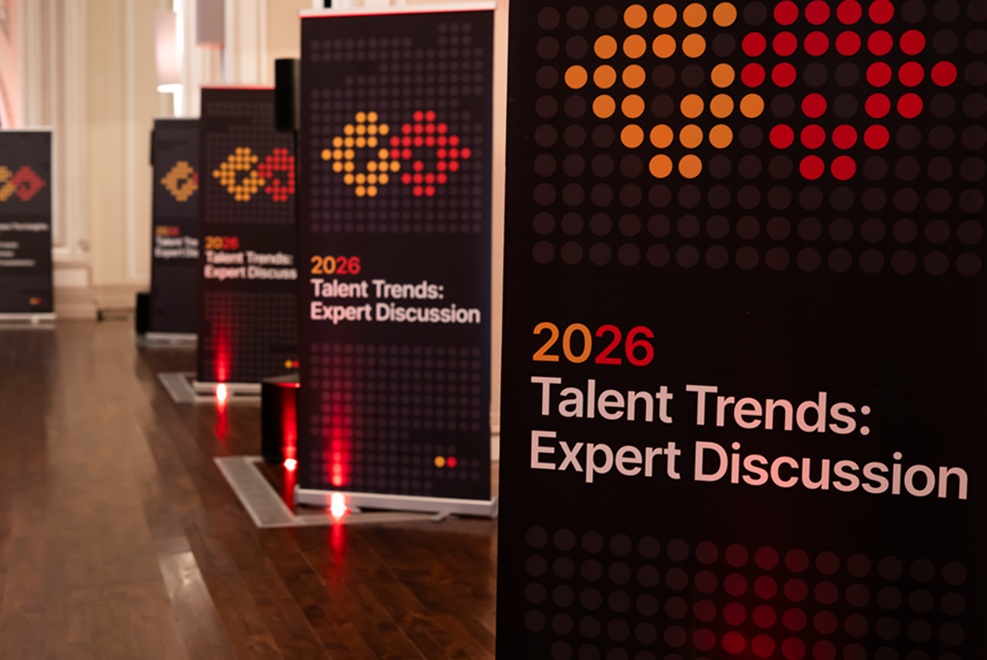
These were the central themes at the Talent Trends: Expert Discussion event, organised by SOFTSWISS, a global software provider, and Pentasia, a recruitment agency specialising in the online entertainment and technology sector. The panel, held in Malta, built its discussion on the findings of the 2026 Talent Trends report published by SOFTSWISS in mid-March.
Four practitioners took the stage:
- Natalia Perkowska, Deputy Chief HR Officer at SOFTSWISS
- Denis Romanovskiy, Chief AI Officer at SOFTSWISS
- Alastair Cleland, Managing Director at Pentasia
- Andrew Cook, Head of Conexus Leadership at The Conexus Group
Their advice is specific, evidence-backed, and in many ways contrary to how most companies in the sector still hire.
The skills conversation companies are not having
Start with the numbers. The World Economic Forum (WEF) data cited in the SOFTSWISS report puts it plainly: 39% of today’s professional skills are expected to shift or become obsolete by 2030. Andrew Cook translated the figure into something more concrete: “That is roughly two-fifths of somebody’s skill set, in whatever job they hold, shifting within the next three years.”
He made one point that cuts through a lot of the AI noise. It does not matter whether skills disappear because AI replaces them or because employers simply stop valuing them. The disruption is the same either way. Scale is what matters here, not cause.
The practical consequence is not that jobs will disappear. It is that the composition of those roles will change substantially. Technical proficiencies may be automated or evolve beyond recognition. Meanwhile, domain knowledge – the deep understanding of how a business actually works – and the ability to make sound decisions under uncertainty become harder to replace and more valuable as a result.
This creates a structural problem for HR departments. Most hiring processes are built around stable role definitions: a fixed list of required skills, a standard set of interview questions, a familiar profile of the right candidate. When those definitions shift faster than the hiring model can adapt, companies end up recruiting for roles that already look different from the job description. Recruitment criteria go stale before the position is even filled.
The companies that will manage this best are not necessarily the ones with the largest budgets. They are the ones willing to rethink what they are actually hiring for.
Candidates are not just applicants any more
There is a second shift happening in parallel, and it is less about technology than about expectations.
The balance between employers and candidates has moved. Candidates – particularly experienced professionals with options – are now active evaluators of the companies they apply to. They assess how a company communicates during the process. They notice when updates go silent for weeks. They draw conclusions from how long a decision takes, and from whether anyone bothers to explain the delay.
“It is no longer about the business saying ‘tell me why I should hire you’. The tables have turned,” said Natalia Perkowska.
This is not sentiment. It has operational consequences. A company that runs a slow, poorly communicated hiring process is not just inefficient – it is losing candidates to competitors who run theirs better. The hiring process is, for many candidates, the first real evidence of how a company operates. If the process is disorganised or dismissive, candidates assume the organisation is too.
Cook was direct about how widespread the problem remains. “They don’t take a great deal of consideration for the fact that the candidate also may have a choice themselves,” he said of companies still treating hiring as a one-sided exercise.
The fix is not complicated. It starts with treating candidates as decision-makers, not applicants waiting for permission.
What AI can do – and what it cannot
AI came up repeatedly throughout the panel. The discussion kept returning to the same underlying question: where does AI genuinely help in hiring, and where does it create problems if left unchecked?
The clearest answer came from looking at what AI is already doing well. Cook noted that AI has taken over many administrative and data-processing tasks that previously consumed recruiter time. Cleland gave a concrete example from his own business: a tool that automatically matches CVs against a database of roughly one million candidates. The time saving is real.
But Cleland also drew the line clearly. “Beyond that,” he said, “you still need a human involvement to bring those candidates in, make a phone call, and hold an interview.”
Romanovskiy looked further ahead. He described a future where companies use AI to simulate realistic work environments during interviews – asking a candidate, for example, to manage AI-generated team members through a live business scenario. This is not yet standard practice, he noted, but it represents a direction the market is moving.
Perkowska offered the clearest summary of where the boundary sits. AI should handle productivity and cut repetitive work. But hiring depends on personal interaction – on reading a person, not a data point. “I think that in hiring, the people-first approach is still what’s going to win companies good talent,” she said.
The consensus across the panel was consistent: AI is a tool that makes human hiring better. It is not a replacement for the human part.
The junior talent problem nobody is solving yet
One of the panel’s sharper observations concerned entry-level hiring – or rather, the disappearance of it.
As AI absorbs tasks that used to define junior roles, the traditional career ladder is losing its bottom rungs. The entry-level position that once gave a graduate their first professional experience is being replaced by automation. The junior who spent two years processing data and building foundational skills before moving to mid-level work no longer has that path in the same form.
The short-term response from many technology companies has been to stop hiring juniors altogether. Romanovskiy was candid about this: SOFTSWISS technology teams are almost entirely hiring senior professionals, because the market currently makes that easy and affordable. It works for now.
The longer-term problem is already forming. If companies across the sector make the same choice – and many are – the pipeline of future mid- and senior-level professionals dries up. Romanovskiy’s estimate: within three to five years, the talent pool will not have enough experienced specialists to meet demand.
The panel identified three ways this could be addressed. None is quick.
The first is internal investment. Companies will need to build their own junior talent through structured training programmes, accepting that development takes time and carries some attrition risk. The second is external: a growth in academies and training providers that prepare early-career professionals to a mid-level standard before they enter the workforce.
The third option is less obvious but potentially significant. AI could create pathways for professionals from adjacent industries – people with strong compliance, regulatory, marketing, or analytical backgrounds – to move into technology-sector roles where their domain expertise fills specific gaps. The technical learning curve drops when AI handles more of the execution. What remains is judgement, context, and sector knowledge – things experienced professionals from other fields already carry.
Six things to do differently in 2026
The panel’s recommendations did not stay abstract. The speakers were specific about what companies should change. Six themes emerged from the discussion.
Be honest about the process. Tell candidates how long hiring will take. When things slow down – as they always do – send an update. It costs nothing and it changes how candidates experience the company. Perkowska made the point with a figure that landed: “The number of candidates that reply and say ‘thank you for letting me know – most companies don’t’ is staggering.”
Stop treating hiring as one-directional. A company decides whether to hire a candidate. The candidate also decides whether to join the company. Both decisions matter. The speed, communication, and professionalism of the recruitment process are visible to candidates and they draw conclusions from all of it. “I still speak to a disproportionate number of clients who believe it is a one-way process,” Cook said.
Take employer branding seriously – and honestly. Many technology companies overestimate how well-known they are outside their immediate network. Even some of the larger businesses in the sector lack the visibility their leadership assumes. Consistent external messaging, realistic recruitment briefs, and clear articulation of what makes the company a good employer – not just a well-funded one – close that gap over time.
Value domain knowledge above tool proficiency. AI platforms change fast. Mastery of any specific tool today carries no guarantee of relevance in two years. What lasts is deep knowledge of how the business works, combined with the willingness to learn new tools as they arrive. Romanovskiy was specific: “Having great domain skills and knowing a bit of AI will open more doors than the other way around.”
There is a related hiring implication. Bringing in external AI specialists who do not yet know the company’s workflows is not always the faster route to adoption. Employees who already understand how the business operates and are experimenting with AI often drive change more effectively than a specialist learning the business from scratch.
Pick up the phone. In a market saturated with automated outreach, a direct call stands out in a way that an email cannot. Perkowska recalled a principle she carried from early in her career: “Do not write emails. Pick up the phone.” The advice is simple enough to dismiss. The panel’s point is that most companies have stopped doing it.
What the data says about where this is going
The 2026 Talent Trends report and the panel discussion point in the same direction. Hiring in the online entertainment and technology sector is moving beyond filling vacancies. The companies managing it well are thinking further ahead – aligning people and processes to future needs rather than current ones, for both the employer and the candidate.
The talent pipeline is getting more complex. Skills are shifting. Junior pipelines are thinning. AI is changing what entry-level work looks like. The companies that treat these as temporary conditions to wait out will find themselves short of the talent they need when the market tightens further.
The 2026 Talent Trends report covers the full picture: hiring dynamics, compensation trends, employer branding, and case studies from businesses working through these challenges now.