


An international study published in Comprehensive Psychiatry reveals behavioral differences between those who bet on esports and those who bet on traditional sports.
A recent scientific article published in Comprehensive Psychiatry directly compares, for the first time, the profiles of esports bettors and traditional sports bettors, investigating the demographic, psychological, and motivational aspects underlying their gambling behaviors.
Who are esports bettors?
Esports bettors are not simply the digital version of traditional sports betting enthusiasts. According to a recent study published in the scientific journal Comprehensive Psychiatry, those who bet on video game competitions have significantly different demographic and psychological characteristics compared to those who bet on soccer, basketball, or tennis.
The research compares the two groups by analyzing age, motivations, impulsivity levels, and the presence of any gambling-related problems. The result is clear: esports bettors represent a distinct and potentially more vulnerable segment.
The first finding to emerge concerns age: esports bettors are, on average, younger than traditional ones. This is a significant element, as younger age is often associated with higher impulsivity and lower risk perception.
But it is not just a matter of age. The study highlights that those who bet on esports more frequently show signs compatible with gambling disorder and, in several cases, symptoms attributable to so-called “gaming disorder”—a problematic relationship with the video games themselves. The overlap between a passion for gaming and betting activities thus creates potentially more fragile ground.
Chart 1 – Average Age
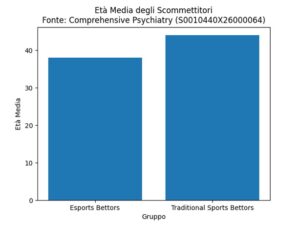
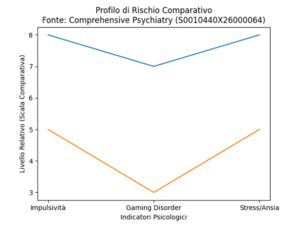
Figure 1. Comparison of average age between esports and traditional bettors.
Source: Comprehensive Psychiatry (S0010440X26000064).
Different motivations compared to traditional sports
Another distinguishing element concerns motivations. Traditional sports bettors are more oriented toward entertainment or interest in the sporting competition. In contrast, those who bet on esports appear more often motivated by: seeking financial gain, a need for escapism or emotional regulation (coping), and the social dimension linked to digital communities.
Added to these factors are higher average levels of stress, anxiety, depression, and impulsivity. These variables, according to researchers, increase the likelihood of developing problematic behaviors.
A growing market that requires attention
The esports betting sector is expanding rapidly (although not in Italy at the moment, due to regulatory restrictions), driven by the global growth of video game competitions and their strong penetration among younger people. For this reason, the study’s authors emphasize the need for targeted prevention and intervention strategies.
Considering esports bettors as a simple subgroup of traditional sports betting risks underestimating their specificities. Their psychological and behavioral profile instead suggests the presence of independent dynamics that require dedicated regulatory and clinical tools.
In a context where the line between digital entertainment and gambling is becoming increasingly thin, understanding these differences is not just an academic matter, but a crucial step in protecting a generation raised on joysticks and streaming platforms.
Chart 2 – Comparative Risk Profile
Figure 2. Comparative representation of the main psychological risk indicators between esports and traditional bettors, based on the study results.
Source: Comprehensive Psychiatry (S0010440X26000064).